

 VALORANT
Phantom, Vandal, or Warden: Which VALORANT Rifle is Best?
Here’s a guide to the pros and cons of every main VALORANT Rifle, so you can pick whether the Phantom, Vandal, or Warden is best for you.
25 Sept 20265 min
ValorantCompetitiveHere’s everything players need to know about VALORANT’s Ranked mode, including a list of all ranks and party restrictions.
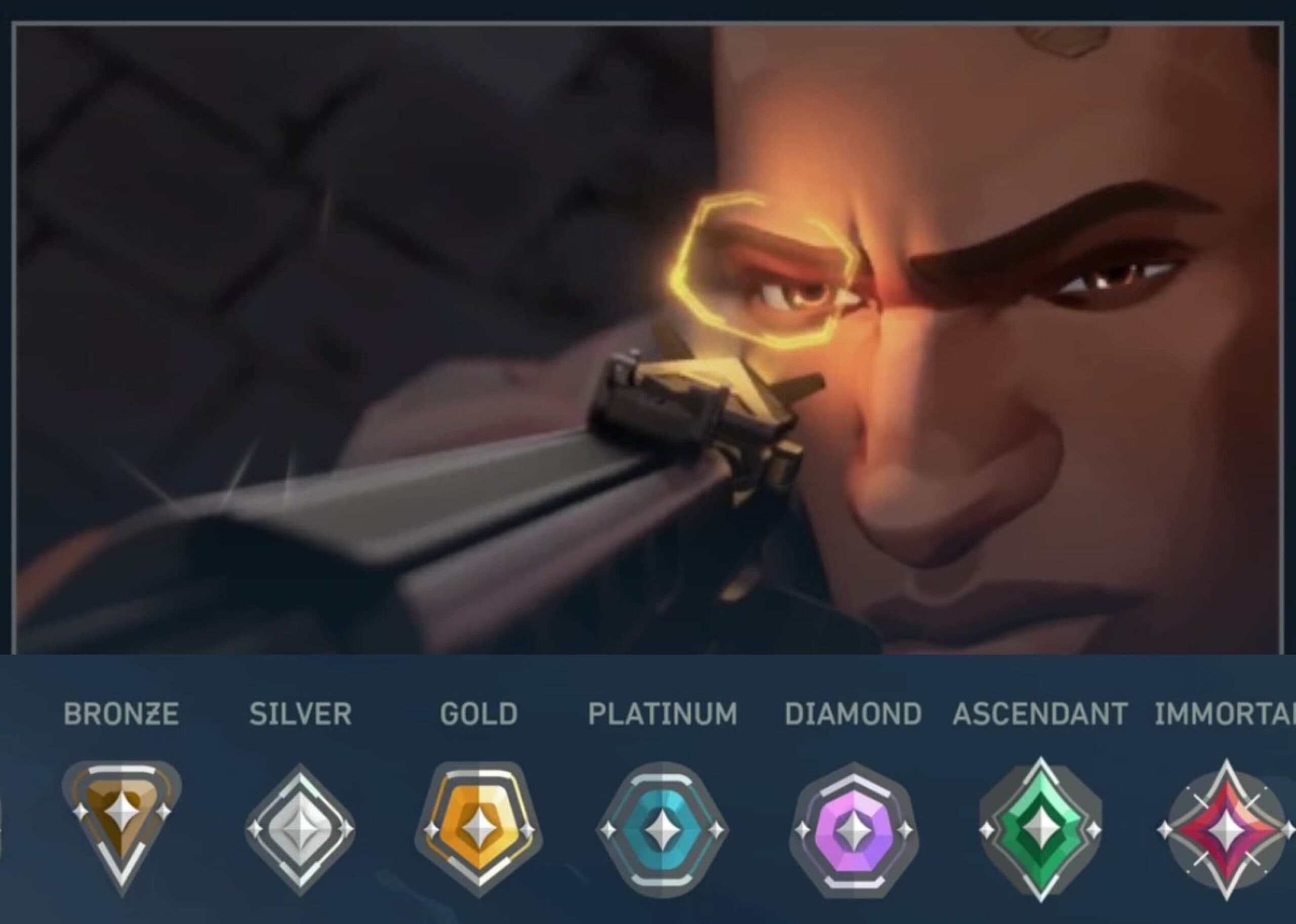
Here’s a guide to VALORANT Ranked, including every Competitive rank and answers to common questions. Image Credits: Riot Games
Whether you’re new to ranked or a returning player with a specific question, we’ve got you covered. Here’s a full guide to VALORANT Ranked in 2026, including a list of all ranks, explanation on party restrictions, and info about matchmaking.
VALORANT Ranked is for players who want a more intense, strategic experience. It gives you an easy way to measure your in-game performance, and also has real consequences for the gameplay decisions you make.
Unrated and Swiftplay don’t have party size restrictions, while Ranked VALORANT is strict about who you can play with. Competitive games are usually longer than other modes, and they typically have players who are more willing to seriously communicate and give comms.
Aside from Unranked, there are 9 total VALORANT ranks. They range from Iron to Radiant, and have players of varying skill levels. Here’s a list from lowest to highest:

Within each full Ranked tier, there are 3 subdivisions. Usually, they start at 1 (lowest) and end at 3 (highest). For example, you would rank into Platinum 1 from Gold 3. Then, you’d climb from Plat 1 to Plat 2 and then Plat 3. Radiant is the one exception: it has leaderboard spots instead of Rank divisions.
Most pro players are in Radiant or Immortal. You’ll find a few in Ascendant, too. You can check the Ranked leaderboard easily in-game, or on third-party.
Radiant is VALORANT’s highest rank. It’s above Immortal 3, and is unique because it’s not like typical ranks. Radiant is more of a leaderboard spot, limited to the top 500 players per region. Grinding RR alone won’t get you there if the leaderboard is already full. The cutoff shifts constantly based on how the current top 500 are performing.
Radiant also comes with extra demands. To hold your spot, you need to play at least one competitive match every 7 days, and every new Act resets Radiant players back into Immortal with a steep 90% RR cut.
Iron is VALORANT’s lowest possible rank. Within this Ranked tier, there are 3 divisions (Iron 1, Iron 2, and Iron 3). Iron 1 is the least skilled. If you’ve never played VALORANT before, you’ll start in the ‘Unranked’ category.

Playing VALORANT Ranked is easy. All you have to do is go to the game’s home screen, move to the left-hand side of the screen, and find the gamemode box. Usually, this will say ‘Unrated’ to start. Click it and switch it to Competitive. This will display your Rank and put you into Ranked queue.
Sometimes, VALORANT stops you from playing Ranked even if you’re not banned from the full game. Players can get Comp banned without being banned from other modes, so make sure your account is in good standing with Riot. If you’re still having issues, check to make sure your party isn’t violating queue restrictions. There are some rules about which ranks and party sizes you can play with.
You also need to complete a certain amount of unrated games and level up before you can play Ranked, so make sure your account isn’t too new and has played a couple matches.

VALORANT has some queue restrictions to keep matches fair and stop skill gaps from ruining games. These change depending on rank and party size. Riot limits how far apart ranks can be when queuing with friends, and those limits tighten as ranks climb higher. Queue restrictions only apply to Competitive and Premier modes, so you can play with whoever you want in Unrated, Swiftplay, and Deathmatch.
To rank up in VALORANT, you need to gain RR points. You gain about 5-25 points for every game you win, and lose about 5-25 for every game you lose.
How much RR you gain or lose depends on how well you played individually in the match. In rare cases, you may gain or lose above 30 or under 5 if you perform very well or very poorly.
If your game ends in a draw, you’ll usually gain or lose a very small amount. A player who went positive might get 2 RR. It’s also possible for a game to draw without giving or taking any Ranked points.
You need 100 RR points to rank up from each VALORANT rank division (for example, from Gold 1 to Gold 2). Since there are 3 divisions in every different full rank, this means you’ll need 300 total to ascend into another tier (ex. from Gold to Platinum).

VALORANT Ranked does have some loss protection with Ranked Shields. When you have Ranked Shields, you can lose RR that puts you below the 0 mark and still stay in the rank you’re at. For example, if you’re in Gold 2 with 3 RR and lose 20 RR from a game, your Ranked Shield will protect you so stay at 0 and only lose 3 RR. This means you’ll remain in Gold 2 instead of dropping down to Gold 1.
Usually, players receive two Ranked Shields upon entering a new full rank. Once both shields run out, a third loss at zero RR finally triggers demotion. Shields only come back after promoting or demoting into a new Tier 1 rank. This small buffer takes some of the sting out of ranked grinding.
Valorant ranks get a soft reset at the start of every new Act, which lands roughly every two months throughout the year. During a soft reset, your visible rank badge disappears, and you need just one placement match to reveal your new starting rank, usually landing a tier or two below where you finished the previous Act.
Riot also runs two hard resets each year, one at the start of a new Season and another at the midseason mark. Both cause a bigger drop and require more placement matches to re-establish your rank. Either way, your actual skill and MMR carry over behind the scenes, so the reset hides your rank rather than wiping out your progress completely.
VALORANT does refund your lost RR in some situations. If you’re in a match that ends prematurely due to a glitch or server issue, you won’t see any RR loss. The game will end in a draw, and you’ll possibly see a red ‘MATCH TERMINATED’ screen before it shuts. This happens most often if VALORANT detects a cheater in your lobby. If you complete a full game with a cheater in it and Riot reviews the game after, you’ll get a full refund of all RR you lost when the cheater is banned.
You can get special in-game rewards for your VALORANT rank. Every Season and Act, you get a special profile charm and gun buddy showing where you ended up. Players can also view your rank on your profile. Each time you rank up, your icon will change.
Stay tuned for more VALORANT news. We regularly cover new skins, VALORANT leaks, and VCT esports happenings. Also, check out our gameplay guides for Split, Abyss, and Lotus.
VALORANTHere’s a guide to the pros and cons of every main VALORANT Rifle, so you can pick whether the Phantom, Vandal, or Warden is best for you.
 VALORANT
Fresh leaks are coming out about the potential new VALORANT Agent, and we may see them sooner than you think.
 VALORANT
Every single VCT CN team has exited Champions Shanghai 2026 in the first elimination round, and the region will not progress to the Playoffs.