
 CS2
CS2Team Vitality CEO Makes Statement After HQ Vandalized, Trophies Stolen
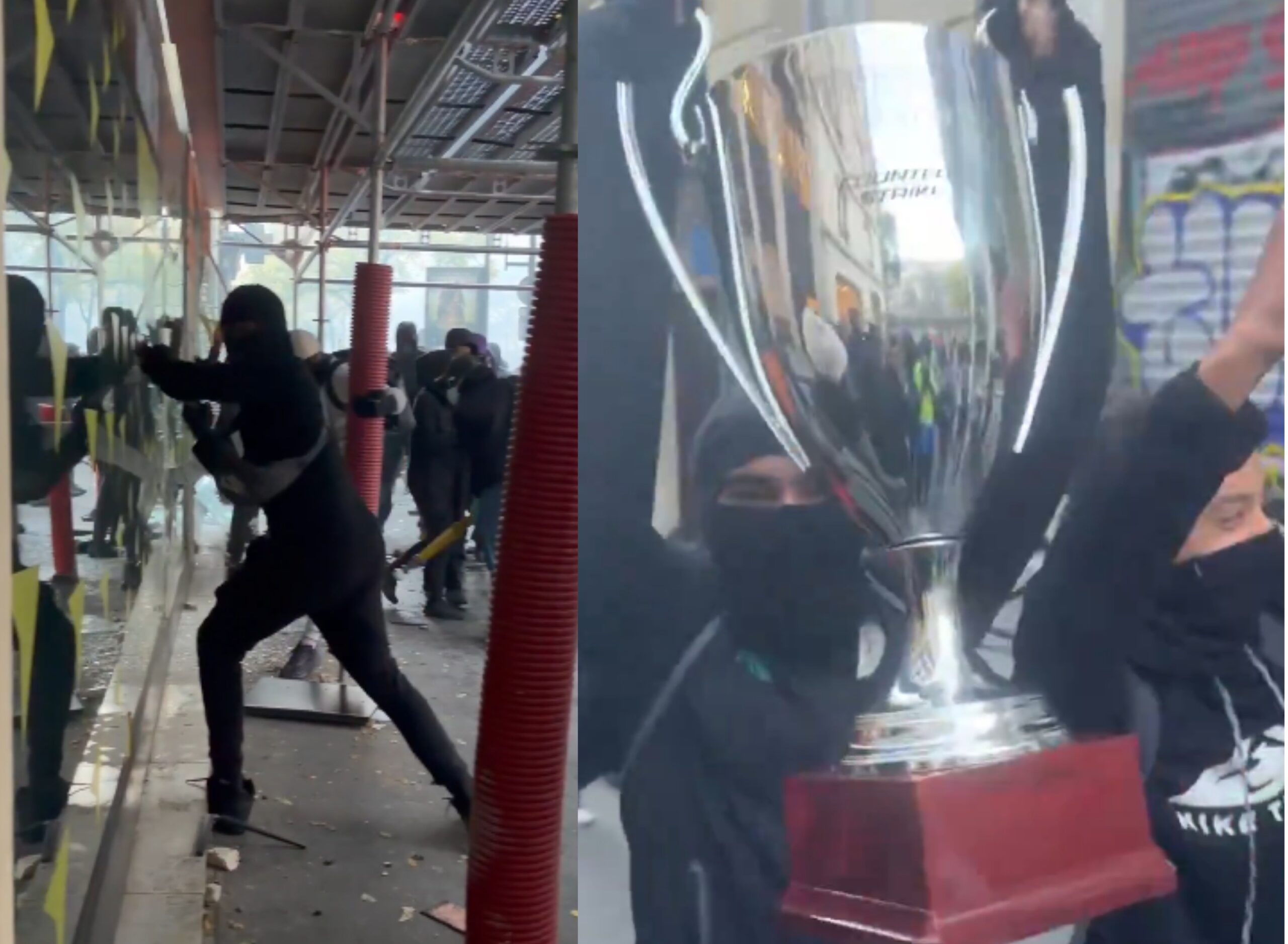
Team Vitality founder and CEO Neo has spoken out after the V.Hive HQ in Paris, France was vandalized, and thieves stole trophies and PCs.
17 Oct 20264 min
CS2BREAKINGIEM USA 2027 returns in April with a $1 million prize pool, 16 teams, and ESL’s first arena venue in the US since IEM Chicago 2019.

ESL confirms IEM USA 2027 with a $1 million prize pool, arena venue, and 16 teams competing from April 5-11. Image Credit: ESL FACEIT Group
ESL just dropped one of the bigger off-season announcements of the year. IEM USA 2027 will run from April 5 to April 11, 2027, with a $1,000,000 prize pool and 16 teams competing for the title. The host city has not been revealed yet, but ESL has confirmed the event will run inside an arena rather than on a convention show floor. That single detail tells you most of what you need to know about how ESL is repositioning the US market.
This year’s IEM event in the USA was hosted in Atlanta on the show floor of a DreamHack convention. Moving to a standalone arena venue is a clear strategic shift. The German tournament operator is treating North America as a Tier 1 destination again, not a regional add-on.
ESL’s official announcement on June 3 confirmed the structural details. Sixteen teams will compete across a group stage and playoff bracket. Eleven invites go through the Global VRS standings (positions 1-11 in the January 2027 ranking). North America and South America each get one direct invite reserved for their top-ranked regional team. The remaining three slots come through qualifiers: two global closed qualifiers running on European servers and one Americas closed qualifier on US servers.
The group stage runs as two groups of eight teams in double-elimination format. Each group sends four teams to the playoff bracket. That leaves an eight-team single-elimination playoff with quarter-finals on Friday, semi-finals on Saturday, and the third-place playoff plus grand final on Sunday. Teams arrive April 3 for media obligations April 4, with departures April 12. The whole thing is LAN from start to finish.
ESL split the VRS data into two reference points. Invites pull from the January 2027 monthly VRS publication, while seeding for the actual event uses the March 2027 publication. So teams have a small window to climb the rankings between invite confirmation and seeding lock. That structure rewards consistent performance across early 2027 rather than just January results.
The $1 million prize pool puts IEM USA 2027 at the same prize tier as other major IEM stops. For context, this year’s IEM Cologne Major carries a $1.25 million pool, while IEM Krakow 2027 (the season opener for ESL’s 2027 calendar) has a $1.25 million pool of its own. So IEM USA 2027 is a Tier 1 event in everything except the Major designation.
ESL released the full prize money and Club Reward distribution at the same time as the announcement. The numbers tell a clear story about how the operator wants to reward both individual performance and Club Championship participation.
The total prize pool sits at $1,000,000 with significant Club Reward payouts on top. Specifically, the IEM USA 2027 prize money distribution looks like this:
The Club Reward structure is the most interesting part. ESL pays organizations significantly more in Club Rewards than the actual on-stage prize money. The winning team earns $125,000 in prize money but $170,000 in Club Reward, meaning the org collects $295,000 total when factoring in both pools. That structure rewards organizations for sending strong rosters and competing deep in the bracket, separate from what players receive directly.
For lower-placed teams, the math shifts. A 13th-16th finish carries $4,000 prize money and zero Club Reward. So orgs that exit in the group stage walk away with much less than mid-table finishers. That gap incentivizes performance rather than just attendance, and it tilts the math toward established Tier 1 teams who can realistically make playoffs.
The single most quoted detail from the announcement came from an unnamed Product Manager at ESL. “The plan is for it to return to an arena next year,” the manager said, referencing the contrast with IEM Atlanta 2025, which played on the DreamHack convention show floor. That seems like a small operational detail. It is not.
DreamHack convention floors are loud, crowded, and don’t really sell the broadcast atmosphere ESL wants for top-tier events. Arenas are different. Lighting, sound design, crowd noise control, and overall production quality all step up dramatically when you move to a dedicated venue. The last time ESL ran an IEM in North America without a DreamHack attachment was IEM Chicago 2019, which was held at the Wintrust Arena. After all, fan response to that event still gets referenced today.
So IEM USA 2027 is not just another tournament. It is ESL’s bet that NA esports infrastructure can support a standalone arena Major-tier event again. After years of regional decline and discussion about whether NA viewership can sustain Tier 1 events, the announcement says yes.
The competitive structure of IEM USA 2027 deserves a closer look because it tells you which teams have realistic paths to the event. Eleven Global VRS invites cover the very top of the world rankings. Look at where those slots typically go in 2026: Vitality, Spirit, Falcons, NaVi, MOUZ, Aurora, Astralis, FURIA, G2, PARIVISION, and The MongolZ. So basically every major roster you would expect at a Tier 1 event gets a direct invite.
That leaves the regional and qualifier paths. North America’s regional VRS invite is the one that matters most for the home audience. Whichever American team ranks highest in the Americas VRS by January 2027 gets the slot. As things stand, that race is wide open. M80, NRG, Liquid, and Legacy are all in the conversation, with Complexity and Wildcard still in the mix. The South American slot is similar but tighter. paiN Gaming, Legacy (their SA-leaning roster), 9z Team, and FURIA’s reserves all compete for SA dominance.
The three qualifier slots are the interesting ones. Two global closed qualifiers and one Americas-specific qualifier. The Americas slot gives regional teams a second chance to qualify. Furthermore, the global qualifiers run on European servers, which gives EU teams without invites a path through.
So the IEM USA 2027 announcement is one piece of a larger ESL Pro Tour 2027 calendar reveal. ESL has committed to seven events across 2027, with the company stating the events will reach three new cities across three different continents. Specifically, IEM Krakow 2027 opens the season on January 27 with a $1.25 million prize pool. ESL Pro League Season 25 takes place in Riyadh, Saudi Arabia. IEM USA 2027 follows in April. The remaining four events are spread across the back half of the year.
ESL has also locked in a major format change for 2027. Every ESL Pro Tour event will feature eight-team playoff brackets played in front of live arena audiences. That ends the era of studio-only finales for Tier 1 events. The change applies to every event from IEM Krakow onwards. For IEM USA 2027 specifically, it means the eight-team playoff bracket gets full arena treatment.
The total prize allocation for 2027 sits at $11,450,000 across all ESL Pro Tour events, with another $1 million on offer through the Annual Club Incentive ($10,450,000 base + $2 million for Grand Slam wins). That puts ESL roughly even with PGL’s $11 million and ahead of BLAST’s $10 million for the calendar year.
ESL held back two key details. First, the host city has not been confirmed. Speculation has run wild on HLTV forums, with Chicago, Dallas, Los Angeles, and Las Vegas all named as candidates. Chicago has the IEM Chicago 2019 legacy. Dallas has hosted multiple esports events at Esports Stadium Arlington. LA has Crypto.com Arena. Las Vegas has T-Mobile Arena. So any of those would work, and ESL has not signaled which way the decision is leaning.
The second missing detail is whether the event ties to a DreamHack festival. Dust2.us noted in their coverage that you have to go all the way back to IEM Chicago 2019 to find the last IEM event in NA without an attached DreamHack festival. Therefore, the assumption is that IEM USA 2027 will have a DreamHack component. ESL has not confirmed or denied this, but the timing in April fits a DreamHack convention window.
The April date itself raises questions too. ESL moved the IEM USA event from May (where IEM Atlanta 2026 sat) to April. The reason is almost certainly the upcoming FiRe Major Buenos Aires 2027, which is set to start in late May. So ESL avoided a calendar clash with the Argentine Major by sliding their NA event earlier.
For North American Counter-Strike fans, IEM USA 2027 is the biggest news of 2026’s off-season so far. The last few years have been rough for NA CS2. EG departed. Complexity downsized. Liquid struggled. NRG faded in and out of relevance. So having a guaranteed Tier 1 IEM event with an arena venue inside the US is a vote of confidence from ESL that the market still matters.
After all, the economics work too. $1 million prize pool, 16 teams, two regional invite slots, three qualifier slots. NA teams have at least one guaranteed spot in the field. Furthermore, combined with the Americas qualifier, the region has a real shot at multiple representatives. For comparison, recent EU-heavy events have seen NA representation drop to one or two teams.
The bigger question is whether NA viewership can support an arena venue. IEM Atlanta 2026 group stage averaged 202K viewers, a 44% decline from IEM Rio 2026. So that is the trend ESL is betting against with the arena move. If IEM USA 2027 delivers strong viewership numbers from the arena format, it validates further investment in the region. If it disappoints, expect ESL to scale back NA commitments again.
The event takes place against a competitive backdrop where every major North American organization needs results. M80 and NRG just exited IEM Cologne Major Stage 1 in mixed positions. Liquid faces elimination on Day 3. The state of NA Counter-Strike heading into 2027 will shape which regional teams actually contend at IEM USA. For ongoing coverage, our CS2 hub tracks every major development through the rest of the year.
ESL also slipped in a quick note about 2028 in the same announcement. The third event of the 2028 ESL Pro Tour calendar now runs April 8-16, 2028, with arrivals April 6 and departures April 17. So ESL is already locking in long-term planning windows for events that have not even been named yet. That kind of advance scheduling helps orgs plan rosters, travel budgets, and broadcast rights well ahead of time.
The full announcement comes from ESL Pro Tour’s official site, with additional context covered in the HLTV report.
CS2Team Vitality founder and CEO Neo has spoken out after the V.Hive HQ in Paris, France was vandalized, and thieves stole trophies and PCs.
 CS2
CS2The new Razer Basilisk mouse has a perfect 180 spin button for FPS games and an AI button. Does it count as esports cheating?
 CS2
CS2BC.Game asked Valve to reset its VRS points to zero after a new region rule. What does this mean for PGL Major Singapore 2026?