
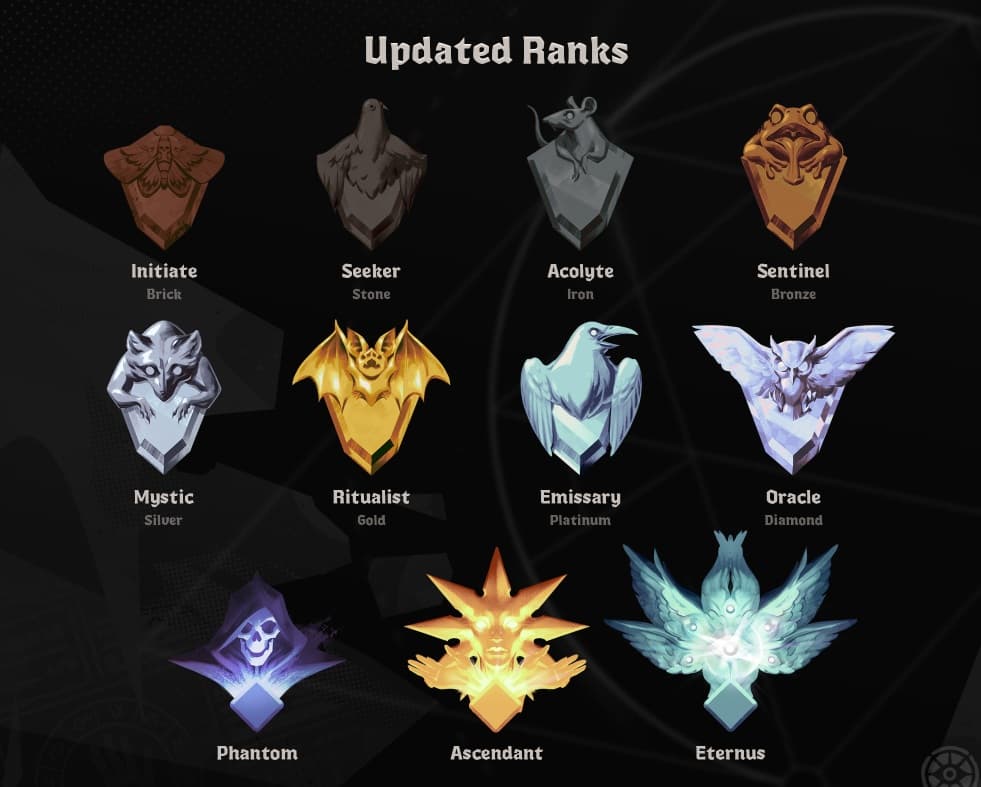
Deadlock Ranked has six subranks within each Rank tier. Image Credits: Valve via Steam
Valve’s hero MOBA Deadlock is kicking into high gear, and a new Deadlock Ranked update has plenty of additions to explore. Here’s a recap of all Deadlock ranks, what they mean, how to climb, and more.
Deadlock Releases New Ranked Updates
On July 30, 2026, Deadlock announced major Patch Notes that will completely change how the game’s Ranked play system works. The update includes new Rank distinctions, queue restrictions, expanded hero bans, and more. Let’s recap everything the playerbase should know.
What’s the Difference Between Standard and Ranked Deadlock?

Deadlock has two main game modes: Standard and Ranked. Standard mode is intended for casual play. It’s a great way to practice your hero skills and game sense before diving into a full competitive matchup. In Deadlock Standard, there are no ranks, no party size restrictions, and no skill restrictions.
Ranked is an entirely different beast, designed for players who want a more intense and competitive experience. Ranked Deadlock sorts you into a player class based on your performance, allowing users to climb to the top and show visible proof of their skill. Ranked does restrict your party size and skill disparity. It also includes a hero ban phase and sophisticated matchmaking system. You’ll be facing off with players at a similar experience level, and the stakes are much higher.
Every Deadlock Rank Explained
Deadlock’s Ranked system is unique compared to other MOBA and hero shooter titles. The game has eleven total ranks, a higher amount than most competitors. The ranks, listed from lowest to highest, are:
- Obscurus
- Initiate
- Seeker
- Acolyte
- Sentinel
- Mystic
- Ritualistic
- Emissary
- Oracle
- Phantom
- Ascendant
- Eternus
Each individual rank except Eternus has six subranks in it. The Subranks are smaller, numbered skill disparities. For example, players within Sentinel could range from:
- Sentinel I
- Sentinel II
- Sentinel III
- Sentinel IV
- Sentinel V
- Sentinel VI

A player who drops below Sentinel I would return to Acolyte. A player who climbs over Sentinel VI would progress to Mystic. If you’re unranked, you’ll have the Obscurus rank automatically.
What is Deadlock’s Highest Rank?
Eternus is Deadlock’s highest rank. Notably, Eternus players don’t have any Subranks. Their standings update daily instead, similarly to VALORANT‘s Radiant and Immortal ranks or League of Legends‘ Challenger level.
How to Play Ranked Mode in Deadlock
You have to meet certain eligibility requirements to even begin queueing Deadlock Ranked. These are:
- Have at least 60 wins in Standard mode.
- Have at least 3 Heroes unlocked.
- Make sure your account is in good standing: no bans, penalties, or restrictions.
In addition, you can only pick Heroes you have won at least 15 games with in Standard Mode. This is just to make sure there’s no trolling or unintentional throwing when players pick a character they don’t have experience with.
You can enter Deadlock Ranked with a specific queue, accessible from the in-game client.
Who Can I Queue With in Deadlock Ranked?
There are some queue restrictions in Deadlock Ranked, depending on who you’re playing with. In most Ranks, you can only solo or duo queue. Players can also only be within one full rank division from each other.
Eternus works a little differently: all of your Eternus duos have to be in Eternus as well.
The Deadlock devs are open to expanding these Ranked restrictions in the future, but want to start here and monitor how it progresses.
What Are Rank Points in Deadlock?
Deadlock’s Ranked Points are the unit of measurement that determines which Ranked tier you fall into. You gain Ranked Points when you win a matchup, and lose them with every loss.
After every Ranked match, your Ranked points will immediately update. A progress bar will show exactly how close you are to climbing into your next rank or falling out of your current one. A win typically adds around 250 points while a loss takes about the same away. The exact number can shift a bit based on the matchmaker’s expectations for that game or if you’re on a win streak.
How Many Ranked Points Do I Need to Rank Up in Deadlock?
Climbing to the next Subrank in each Rank takes 1000 points. However, remember that each Rank has six Subranks: moving from the final Subrank to the next full Ranked tier requires 2000 points. For example, Mystic VI to Ritualistic I. After hitting Eternus, the game’s highest rank, things change. Players will recieve an individualized ranking rather than a subrank tier.
Is There Loss Protection in Deadlock Ranked?
There are some loss protection measures in Deadlock in case you have a bad few games.. You have five protective shields at the bottom of every full Rank before demoting. Subrank boundaries work the same way, but you can only lose two games before dropping down a notch.
Can I Leave a Deadlock Game if my Teammate Goes AFK?

Everyone hates a griefer, but there’s some good news: you can leave, surrender, or remake a Deadlock Ranked game if one of your teammates goes AFK. You just need to make sure this occurs after the teammate in question has been gone for over five minutes.
Deadlock elaborates on this in thr Patch Notes release: “If a player abandons a game before 5 minutes, the game will be marked as safe to leave and voided for all players except the leaver and their party. The game will count as a loss for the leaver and their party, and the abandoning player will receive leaver penalties.”
In other words, you won’t lose any Ranked Points for leaving a game with a long-term AFK hero. The game will still count as a win if you manage to 4v5 and make a comeback, and you’ll still recieve Ranked Points for it in that case.
Other Important Info About Deadlock Ranked: Pre-Game, Bans, and Queueing
There are a couple more important things you should know about Deadlock ranked before you lock in. First, the game’s matchmaking system takes your hero pool preferences into account. However, it also needs to make sure you can work with with solid team compositions. It’s a delicate balancing act, and the process should keep getting better as the player base grows and new heroes join the roster. It gives everyone a stronger shot at both a balanced match and their top hero pick.
Can I Swap Heroes in Deadlock?
That said, matchmaking can only do so much when the queue is thin, particularly in certain high ranks or less densely populated regions. That’s why one big change players will notice in the July 2026 update is a pre-game phase where players can swap their hero for any unlocked, unpicked hero.
Pre-game mechanics let teams are not intended for counterpicking. They mainly allow teams to ensure their chosen Heroes all work well together and make last-minute changes. You won’t see the enemy team’s swaps in real time, only their starting picks. Each player can only swap heroes once.
Can I Swap Lanes in Deadlock?
You can adjust your starting lane in the pre-game phase. However, zipline swaps won’t be available afterward. In addition, you can no longer pause for the first two minutes of the match, preventing further changes.
Can I Ban Heroes in Deadlock
Yes, you can ban heroes in Deadlock. In addition, the recent July 2026 Patch Notes have raised the bar on how many characters you can eliminate from the pool. Ranked bans have increase from two heroes to three. In addition, an upgraded banning algorithm will make the process smoother.
Stay tuned for more Deadlock esports and in-game news. For more in-depth explanation, check out the official Patch Notes here.