
 CS2
CS2Team Vitality CEO Makes Statement After HQ Vandalized, Trophies Stolen
Team Vitality founder and CEO Neo has spoken out after the V.Hive HQ in Paris, France was vandalized, and thieves stole trophies and PCs.
17 Oct 20264 min
CS2BREAKINGWouter Sleijffers was the CEO of Fnatic from 2015 to 2019, leading the organisation during its iconic major-winning CS:GO era and League of Legends Worlds 2018 finals run. Today, as co-founder of ELO, Wouter helps brands empower their communities to build online spaces and run events.
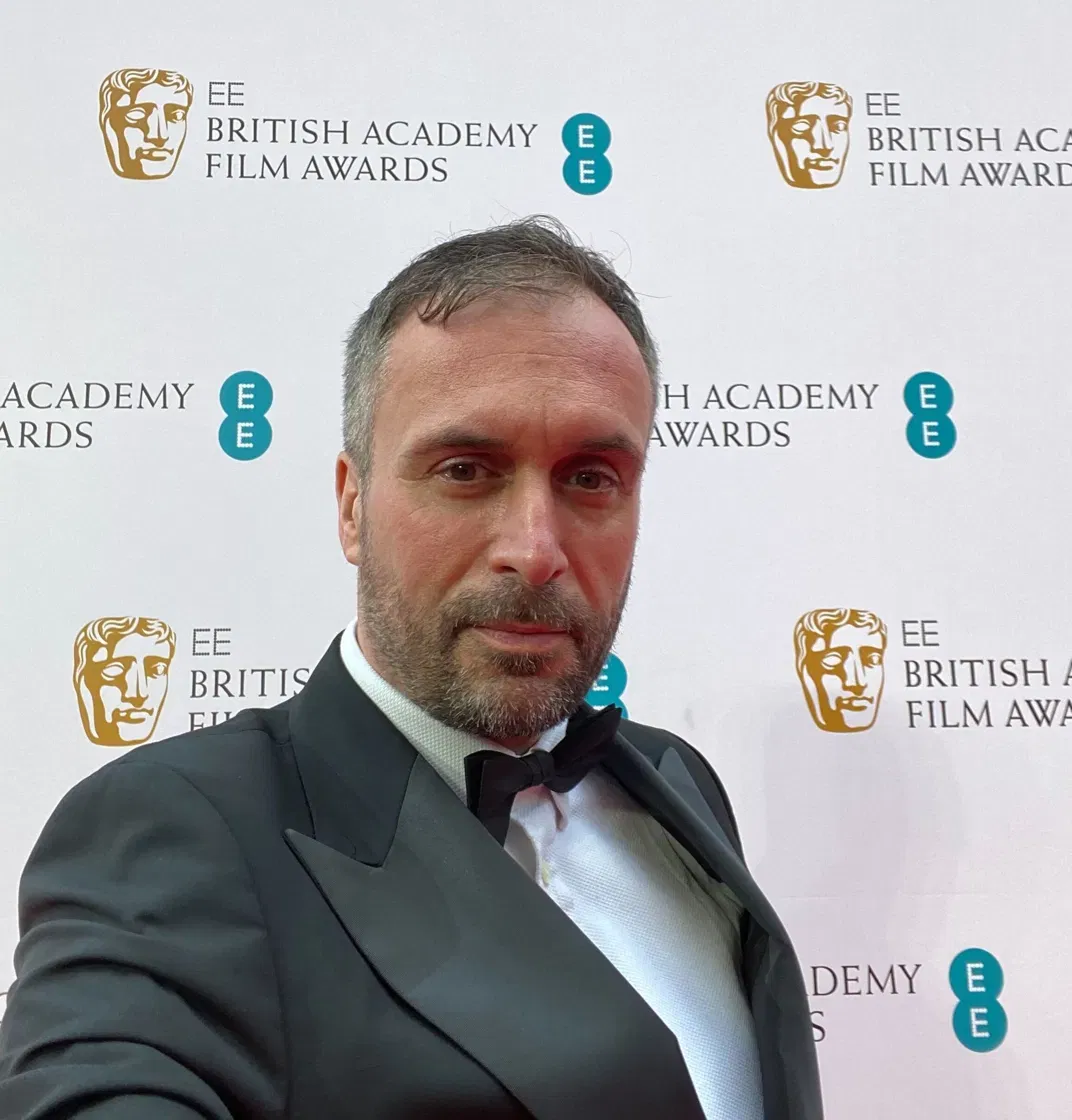
Wouter Sleijffers, former CEO of Fnatic and GIANTX, now co-founder of ELO. (Credit: @wsleijffers)
In an exclusive interview with Esportnow.gg, Wouter shared his thoughts on why top competitive placements aren’t always the smartest business strategy.
“From a more commercial perspective, top four is good enough,” Wouter explains, pointing to UK football giant Arsenal’s long-term popularity despite decade-long title droughts. He warns that peak competitive success can actually hurt expanding organisations, as talent gets poached before the commercial infrastructure is ready to capitalise on it.
Wouter also highlights the massive cultural shift towards content creators over traditional trophies. Comparing game streams to team-produced esports content, he notes that return on investment is far higher when leaning into personalities.
“In competition, being number one may not yield as much result as just being popular or a good personality,” Wouter says. As blockbuster titles like GTA 6 loom on the horizon, he emphasises that brands and teams must adapt to gaming culture rather than forcing a traditional sports model.
Q: Are you trying to solve a specific problem in esports through community building?
WS: “Not specific to esports. But there’s definitely some experience, of course, that me and my co-founder Roald, who comes from Faceit, have seen and things that we tried to solve where we were running our businesses.
And obviously, it’s interesting because in esports, I was also asked as a typical sort of tech question, ‘What problem are you trying to solve?’ Sometimes you run into these difficult questions, and you don’t have a straight up answer. And my first answer was like, ‘Well, I’m not sure if we’re solving a problem. I just hope we create more problems for our competition in esports and competition than they do for us.’
But obviously, I was posed an interesting question because it’s typically an industry that’s born out of passion. In fact, it reminds me of a presentation that I used to have, which was a bit of my keynote kind of thing. It was ‘The Five Ps of Esports,’ but it was not just esports. It’s actually how something starts from passion, and from passion we had a drive for professionalism that’s actually the first time the word ‘esports’ came up. And then we evolved to power brands, and then the fifth was profit. Profit was sort of like… so I need to think again about the platform. That’s basically how we get to maturity.
We didn’t have a typical product, but then it was like, ‘OK, the product that we actually have is, first of all, what we cater to our fans.’ And I think for fans, it is a level of catering to that passion and fandom, but also how you’re in touch with the brands and the players that you like. And then obviously it’s about brands and how brands can build associations and connections that are relevant to them.
So to bring it back to your question: obviously community in gaming and esports is nothing new. In fact, it’s really nothing new anywhere. But typically, if you were really thinking hard about what you’re going to do with this brand and the passion that we have, it’s about how you work with your community. It’s all digital. And I guess one of the problems that we saw was that it’s very hard to distinguish who is really part of the community, what they are doing, and what they are saying. Part of that is the insights.
The other part is: how do you create something that is commercially interesting for brands? Sometimes you could say it’s a bit of a dirty word, but it’s actually not a sellout. There can be a beautiful partnership between a brand and the fans if done right.
So I guess these things we took together, along with the fact that we were definitely early adopters of Reddit, Discord, and things like this. And I say early adopters because even when that has been around for some time, many businesses out there are now only starting to adopt the community thesis or philosophy. Or sometimes it just starts with adopting the words, but they’re actually not familiar at all with those kinds of platforms, let alone how to handle them.
A lot of that experience is what we pack into this – to scratch under that surface of community, which for many is actually only a word because they put it together with social media and think, ‘Let’s just push more messages and stuff on people.’ So what we’re looking at is how brands and businesses can use all that experience for what we call not community management, but community empowerment.”
Q: Communities are very organic – sometimes publishers like Nintendo even try to shut them down. How do you balance brand involvement without destroying that organic nature?
WS: “One thing that we say with community empowerment – to make that distinct from community management – is that you have to be comfortable with giving powerful reins over to the community.
With everything, there are pros and cons. Cons can be that there are things happening you didn’t foresee or didn’t want to happen. The pros are that there’s a great level of innovation happening. In fact, if you think of it from a marketing perspective, it’s probably your best marketing tool because these are authentic fans inviting people to the community because it’s a beautiful place to be.
For many people and businesses, it’s still a very uncomfortable thing to do. With ELO, like I said, we don’t do community management, but we will help you set up your community for success. There are plenty of examples in gaming and esports – you don’t have to look very far. The community builds games themselves that become big games, or they build events and stuff like this.
I remember one of those experiences in the earlier days with Fnatic, to give you an example. It was with the Street Fighter community and Henry, our then-finance controller. He was part of the community, and we were with Fnatic in the bunker in London. He said, ‘Hey guys, can I use the bunker for a weekend? We’re thinking about organising some tournaments.’ I said, ‘Sure Henry, here are the keys. No one is here on the weekend.’
Already by Saturday morning, I got messages saying, ‘Hey, do you know what’s happening there?’ It was full – rammed full with the Street Fighter community, not only from London or the UK, but coming from abroad to play and compete the whole weekend. So we were like, ‘Henry, what did you do? Can you do that again?’ But it was all self-organised. This translates to so much love for the community and for the game. So how do you balance letting people do that while still maintaining that relationship with the game and the studio?
For us, it starts in the digital space by knowing what your community is, where they are, and what their interests are. But part of this – taking the explicit example of a game studio or a competition setting up for success – means that when you design the in-game experience, we can help you design the out-of-game experience from the outside. That way, you don’t have to suddenly think, ‘Oh my God, they want to do this, a partner wants to do that,’ and you’re just not prepared for it. Timing is so important, because at some stage, people lose interest.
When you have that principle, you can apply it to many things: how you co-develop, how you give access to data, and how you give access to digital assets – you can even think in a 3D world about print files and things like that. At the same time, you can think through your business model. What makes it uncomfortable at times is that people fear losing part of their revenue streams, but they can think in advance about how to still benefit from it and maintain a healthy business and partnership model.
That is speaking more conceptually about where we started out, but obviously there are some very specific, basic things that we do. Again, that all relates back to things we saw over those many years in esports that are still very much relevant.”
Q: Are there any specific games or companies that you think are handling community power effectively right now?
WS: “Yeah, I mean, there are plenty of good examples; it’s always a spectrum.
Look at GTA 6, for example, with typical map-making and letting people just have a go with it. Another game, I must admit I haven’t played it, but it started from a community member, is Predecessor. It actually started out with a person who was a streamer for a particular game that shut down, but they handed over certain assets to the community. He took it on and created Predecessor on the back of that. He started out as a streamer with an audience, and from that audience, he built a game that they just love playing. It’s an interesting example of community initiative.
Then there’s Stop Killing Games, where the community stands up for games going to the graveyard and says, ‘Hey guys, I paid for it, I still want to play it. Could you hand certain things over to the community so we can keep it alive?’
Somewhere in the middle of that spectrum, I’m very familiar with League of Legends and Riot Games. I always find Riot an interesting example because they are very community-focused and do a lot for and with the community. Yet still, I’ve always found it surprising that it’s quite hard to get access to data, even though there are so many things the community and esports people have built that keep players engaged and wanting to play more.
Go back in time to when co-streaming started in the early days of the European LCS and the LEC. They initially tried to take down co-streams. Now it’s unthinkable, because people realised… well, they knew, but they still tried to fight it before eventually giving up and asking, ‘Why are we not collaborating with the streamers?’ So they went from seeing them as pirates to partnering with co-streamers. That’s been an interesting development.
Still, I wonder why it’s nearly impossible to run your own competitive event. This isn’t what we do at ELO, but if there were a clear blueprint for running an event that you could comply with, it would very much help grassroots esports. Even for a tiny community event, exposing people early to competitive League of Legends rules helps them grow up in an ecosystem where it’s about being good at the game and understanding the rules.
I say that because at Fnatic and Excel, we saw people jump from having no competitive rule system straight into the big circuit, which was a massive step. Some people struggled to adjust to that kind of system, not because they weren’t good enough players.
On the other end of the spectrum, Nintendo is very IP-focused. In game land, that sits quite far on the other side, and good for them, they are doing well. But they may be more the exception than the rule, because community-driven games are generally doing pretty well. Those are a few examples people can relate to.”
Q: With people following streamers over pro teams, would you build an org around competitive results first or focus on content creators today?
WS: “Definitely content creators, more than ever. It’s something I was looking for at Excel Esports (now GiantX).
At the time, we had a good relationship with Caedrel. Caedrel played in our League of Legends team, retired, and after finishing his professional playing career, he did a great interview with Riot Games. Everyone loved him, so they invited him to the broadcast desk. He became great on the desk and grew into a successful streamer. I was hoping for Caedrel to come on board with Excel as a personality, because there are a few things at play here.
I’ve always thought esports sits somewhere between sports and music. In fact, some people I speak to get a bit tired of this because I keep advocating for it, but the word ‘esports’ sometimes does more damage than good. I don’t use the term ‘traditional sports’ either, because sports is innovating very quickly. By using the word ‘esports’, we act like we’re just the new kid on the block, when really it’s all gaming, and there’s a lot happening here.
If you apply that thinking across talent, I draw parallels between sports, gaming, and music. Music has publishers too, and people complain that the publisher holds all the rights. But actually, there are still the fans, the ecosystem, and a shifting power play between performers and creators.
With gaming, because it’s less tribal, unless you’re a die-hard fan of a specific org, people affiliate much more with individual personalities in an esports organisation. Then there’s the financial and commercial factor. The harsh reality for a team producing its own content is that the investment required to make content with pro gamers often doesn’t yield high viewership compared to a casual game stream. You can see that from esports teams’ YouTube channels pivoting toward casual gaming streams.
From an ROI perspective, you get more viewers with simple gameplay edits without needing expensive talent in the content. As a CEO, sometimes you need to think along those lines and look at what you get back. Don’t get me wrong, esports is a beautiful thing and the passion is amazing, but managing what you get in return means the balance is now tipped more towards streamers. In competition, being number one may not yield as much result as just being popular or having a great personality.”
Q: So in a franchise system, being the single best team isn’t necessarily the most profitable strategy?
WS: “From a commercial CEO perspective, not for the performance staff managing the pro gamers, but commercially, I always said top four was good enough for me. I wanted to be in the visible spectrum: being on stage and reaching a reasonable level. Going beyond that helps with fandom, but top four is the sweet spot.
It’s almost like Arsenal in the UK. They haven’t won the league every single year, but they’ve done pretty well commercially while remaining immensely popular. When I joined Excel Esports, we were still building up, and I told the team, ‘Look guys, success can come too early.’
When you’re successful too early, other teams want to buy your players, and you might not be commercially ready yet to service or attract big partners. You might have your moment of fame and pitch your brand, but by next season, your roster gets picked apart and you start from the bottom again. It’s about carefully building out the organisation so that everything comes together to support operating at that top level sustainably.”
Q: What has shifted in the industry from when you joined Fnatic in 2015 to when you left GiantX in 2023?
WS: “A few things. To make a final point on content creators: it’s still tricky because you can’t just sign creators and throw more money at them. Brand building takes time, and the loyalty of a creator’s fanbase doesn’t automatically transfer to your team brand. You need to find the right balance, which is why creator-founded brands work so well – all that love and passion is baked into the team from day one.
In the early days, there was a belief that esports would develop just like traditional sports through franchising in League of Legends or Counter-Strike. I was part of those early conversations where we pitched to sports investors using slides that correlated sports media rights with esports potential. We tried telling Twitch, YouTube, and Facebook that they needed to pay more for broadcast rights.
It never took off, and I think the reason comes back to my music comparison. I’m part of a generation in music that grew up downloading music for free. A similar thing happened in gaming: a whole generation grew up with free-to-play games and free content. Why would they start paying for broadcast access?
Because of that initial investor excitement, inflation hit, money poured in, and most of it went straight to player salaries because everyone assumed buying the best players guaranteed commercial success. That didn’t work out, and that capital drained straight out of the ecosystem. Even with league stipends like the LEC, it was good support, but barely enough to grow a business on. Throwing around massive prize pools was another mistake; you pay it out once, it’s gone, and it doesn’t build long-term infrastructure.
The second major shift was COVID. Pausing live events threw the industry back. People thought running online events was a cheaper alternative, but it’s like running a business conference online; it just doesn’t work. Watching top teams play online vs. in an arena is like watching Arsenal versus Tottenham on a local park pitch; it loses its magic without the big stadium atmosphere. That had a massive knock-on effect commercially.
Overall, too many teams built huge cost bases assuming sports-style monetisation. They lacked the right commercial inventory, monetisation infrastructure on platforms like YouTube remained underdeveloped, and investor money was poorly spent. That brings me back to my fifth ‘P’ – profit. You can only reach profit in a mature ecosystem that isn’t just borrowed from somewhere else.
It reminds me of the Overwatch League. We pitched for it at Fnatic, but we couldn’t use the Fnatic name. We had to adopt a new franchise name, so we weren’t overly keen. I always viewed it as an immature game trying to slap a mature sports model on top of itself. If you grow too fast without the infrastructure, you fail fast too.”
Q: Did you ever discuss franchising with Valve for Counter-Strike, and why didn’t it ever happen?
WS: “I never spoke directly with Valve about franchising. ESL may have had those conversations, but I didn’t.
I was heavily involved on the board of WESA (the World Esports Association), which was a natural evolution of gentlemen’s agreements between teams trying to avoid calendar clashes. WESA evolved into the Counter-Strike open franchise structure, but Valve eventually pulled the plug on partnered teams and direct Pro League invites because they felt it excluded aspirational teams and players from the top level.
It was also hard to get all the teams aligned. The European teams were more cooperative, whereas the American teams played hardball around ownership structures. Finding the right balance between team size, viewership contribution, and revenue distribution is delicate.
That said, ESL and the partner teams got quite far. Participating in ESL’s partner system and sharing sticker money was at times more lucrative for teams than being in the LEC. A big part of that success was that Valve was not funding it, which forced everyone to focus heavily on commercial viability. Compare that to Riot’s LEC, where the primary objective for the publisher is using esports as a marketing tool to drive in-game purchases.”
Q: What is the biggest mistake brands and executives will make when trying to enter a community like GTA 6?
WS: “The number one mistake is not being mindful when you step into someone else’s court. No matter what you’ve achieved elsewhere, you can’t walk in and say, ‘Well, look at me!’
It’s like music: if you’re a great blues player and decide to play hard rock, the hard rock community will say, ‘We respect what you did over there, but you start at the bottom here.’
When we brought Fnatic into a new game, we treated it as a three-year process: Year 1 is just learning; Year 2 is getting your act together and building standards; and Year 3 is where you establish a genuine, worthwhile presence.
Brands also shouldn’t view GTA 6 as just another broadcast or ad channel. It’s a community experience, which is the core philosophy behind ELO. Social media is about public broadcasting to an audience, whereas community is about creating a cohesive, shared experience where fans have control. You need to enable the platform and let people experience what they came for, exploring what you offer organically rather than constantly trying to drag them off the platform to buy something elsewhere.”
Q: Will massive games like GTA 6 or Roblox force investors to choose casual creators over competitive League of Legends or CS rosters?
WS: “That’s the million-dollar question. The way I look at it, we shouldn’t feel forced to own a competitive team just because that’s where the industry started.
I look at choices across four tiers: pure content creation, working with content creators, open competitive circuit teams, and franchised league teams. Creating content is relatively cheap compared to buying into a franchised league. Teams that think in terms of gaming culture rather than trying to be a Premier League team across five different titles are making smarter investment decisions.
Esports still brings incredible value, but brands need to evaluate product-market fit. We had JD Sports as a sponsor at Excel, and in the end, they were more interested in Fortnite and gaming culture than pure competitive results. The mix worked well for them.
Brands often say they want to be in esports when what they actually mean is they want to be in gaming. If you master that distinction, align with what your audience actually likes, and build an authentic reputation, there are huge revenue streams available beyond just competing.”
Q: Is there anything else you want to share about where the industry is heading?
WS: “After eight years, a lot of the same conversations are still happening, and teams are still struggling. But if people think more along the lines of gaming culture, they will find a path to that fifth ‘P’ of profit.
Community is an underestimated pillar in making these businesses successful. Gaming and esports are the digital avant-garde of business – it’s easy to make digital products or games now, but you can’t easily replicate or AI-generate an authentic community.
Over the past 20 years, businesses were built around social media; the next era will be businesses built around community empowerment.”
Q: Is the future of esports decentralisation and local, grassroots paths to World Championships, similar to games like the Pokémon TCG?
WS: “I think so. Building from the grassroots up gives players early exposure to competitive structures and clear progression ladders.
You can’t micro-manage every level centrally. Publisher and tournament operators should provide the rulesets and digital tools, then trust local communities to self-organise grassroots events that feed points into the top-level circuits.
I see it locally where I live with card game and darts tournaments. My son played in local Yu-Gi-Oh! tournaments at a local fair – he started out as a young boy facing older players, but the system tracked his points and progression all the way through. That grassroots experience and authentic connection is what makes gaming so powerful, and that’s what we need to foster.”
CS2Team Vitality founder and CEO Neo has spoken out after the V.Hive HQ in Paris, France was vandalized, and thieves stole trophies and PCs.
 CS2
CS2The new Razer Basilisk mouse has a perfect 180 spin button for FPS games and an AI button. Does it count as esports cheating?
 CS2
CS2Here’s everything CS2 esports fans should know about fl0m’s iBUYPOWER Masters FML 2026, including its teams, format, and how to watch.